
Before she found the right services, Lucy (not her real name) faced spiralling into crisis.
Requiring care as an adult with multiple disabilities, Lucy has lived successfully with a local family since 1999 as part of the council’s Shared Lives programme. “My family love her,” says her main carer, Gillian (also not her real name).
Lucy, now aged 54, is a warm, caring person who values friendship and social contact. Although she doesn’t use speech, she’s a talented communicator, using vocal sounds and gesture to hold animated conversations.
Until 2015, Lucy had coped on weekdays by using a statutory building-based day service. Then the building closed and Lucy transferred to a new community-based service operating out of a library.

“Monday to Friday, she would arrive at the library in a taxi, then leave again in a minibus to go out,” Gillian explained. “It seemed like most had to leave the building.”
Activities involved going round the shops, or going to the library or garden centre. At one point, during the winter, Lucy joined a walking group. Lucy was very unhappy and Gillian’s concerns grew. There were several issues around Lucy’s safety and her dignity.
Lucy doesn’t use a wheelchair and cannot sit, stand or walk for long periods of time without experiencing pain in her legs. She also missed the benefits of consistent relationships and social connections.
“Things could have got really bad. We had to act,” said Gillian. She contacted Lucy’s Care Manager, who came to their home to discuss the situation.
“She was amazing. It was all about Lucy,” Gillian said. Gillian knew about Parity’s services and convinced the Care Manager that Lucy should access them. Lucy began attending the Mytchett service.
“Lucy takes a while to get used to people,” says Day Service Manager Julie Cantillon. “She’s quite sensitive. You could upset her by pushing her too far, where she’s out of her comfort zone.”
Lucy wouldn’t go out on the minibus and Gillian explained that Lucy might be worried that she was being taken to a library or garden centre again.
“So we started planning short trips with a student Lucy was fond of,” Julie said. “She now knows we’re not just taking her somewhere that she doesn’t want to be. We show her pictures, look on the internet together so she’s clear where she’s going. She goes to the other day services to socialise. She’s been on a canal boat trip, to Runways End Activity Centre, on shopping trips to buy food.”
When shopping, Lucy pushes the trolley and scans the items. She participates as far as possible, encouraged to build her independence. When cooking, she identifies ingredients and uses the scales to work on number recognition. Staff ask her to weigh items for other people. Lucy does jobs around the centre, putting laundry on, stocking bathrooms, making drinks. The tasks are also a way for her to exercise and move her legs.
In terms of trying new things, Lucy originally wasn’t interested in developing art skills. Staff encouraged her to do join-the-dots, and she can now draw, colour-in and paint confidently. She shows talent in other areas that keep her mind active, sometimes using the apps on an iPad. She’s learning to write and recognise her own name.
“She’s very precise,” says Julie. “With her artwork, she will look for lines. With tablework, her hand-eye coordination is very good, she can do colour sorting, and recognition games like matching pairs. We do memory games and her short-term memory is excellent.”
Julie describes how staff try to think of a different way around things. “For example, Lucy didn’t want to take part in an obstacle course we’d created for the group, with skills challenges along the way. But we suggested she push Julie round the course in a wheelchair, with help from another keyworker. She agreed to it. Halfway round she started doing the challenges too.”
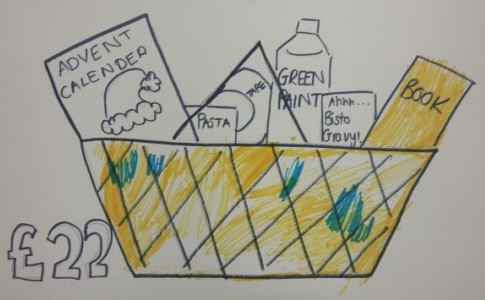
Staff came up with a way for Lucy to work on money skills. “We hide food items around the centre with prices on and she looks for them. Then with some fake money she works out if she can buy each item she finds.”
Although shy at first, Lucy is starting to assert herself more. “She’s making her own choices,” says Julie. “She’s much more confident in social situations and we’ve started to see a cheekier and jokey side of Lucy, too.”
Staff have noticed how much Lucy enjoys helping others. She has a very maternal relationship towards a student who’s physically fragile. Lucy offered this student some of her drink on a spoon after she saw a keyworker helping the student to drink.
“The friendships she’s built with other students are lovely, very caring,” Julie says. “There are four students she’s really close with and we encourage that. Although they don’t use speech very much, they have a chat. She will watch for people arriving. She loves seeing what everyone’s doing.”
Lucy’s friendships have led her to try an activity she would have avoided before.
“We stayed away from trips to garden centres for a bit,” Julie says. “Then one of her friends had a birthday and wanted to go to one. Perhaps as it was more out-of-the-way than the garden centres Lucy used to go to, she was ok. Since then, she’s gone to a couple more.”
Lucy’s consultant, Dr.Amalsha Vithanaarachchi from West Surrey’s Community Team for People with Learning Disabilities has noticed the change in Lucy’s demeanor.
“Lucy’s new day service is very helpful,” Dr Vithanaarachchi says. “She is given a lot of care by the staff there.”
“She’s welcomed, feels at home, has social contact,” says Gillian. “We used to have tears before. She’s happy in the mornings now, ready and looking for the taxi. She’s happy when she comes back.”